Crane mats form the working surface between heavy lifting equipment and the ground below. Getting them right is about more than size and weight. It means understanding how loads move through the mat, how performance is proven, and what engineering evidence supports the design. Asking the right questions ensures predictable load spread, structural stability, and safer lifting operations in real site conditions.
What are Crane Mats?
Crane mats form the interface between heavy lifting equipment and the ground below, spreading high loads safely to maintain stability and control bearing pressure. Selecting the right mat system is critical to safe lifting and compliant site operation.
Effective load transfer depends on stiffness, structural strength, and controlled deflection. Mat layout is usually defined through temporary works design, based on ground conditions, bearing capacity, and applied loads.
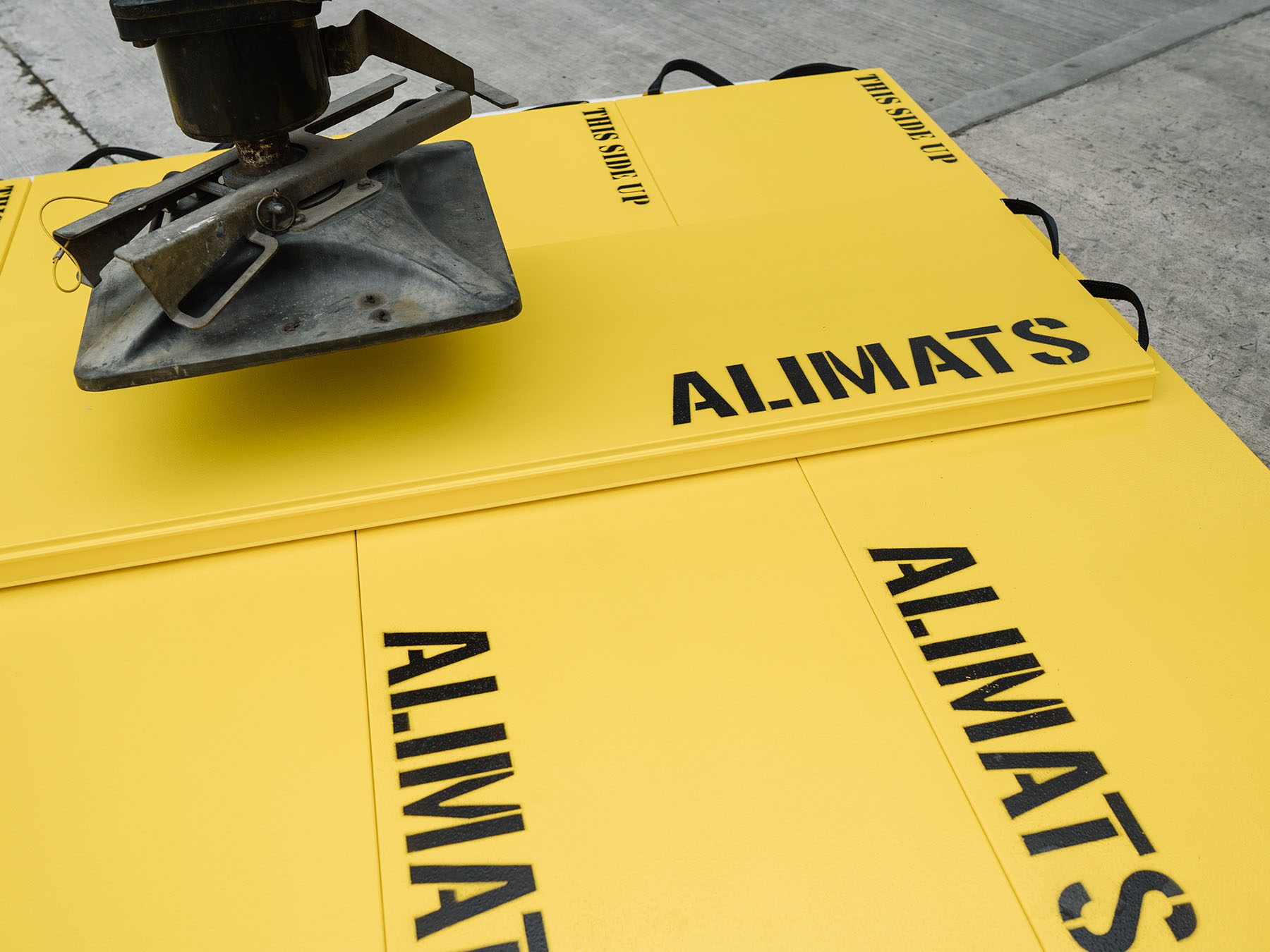
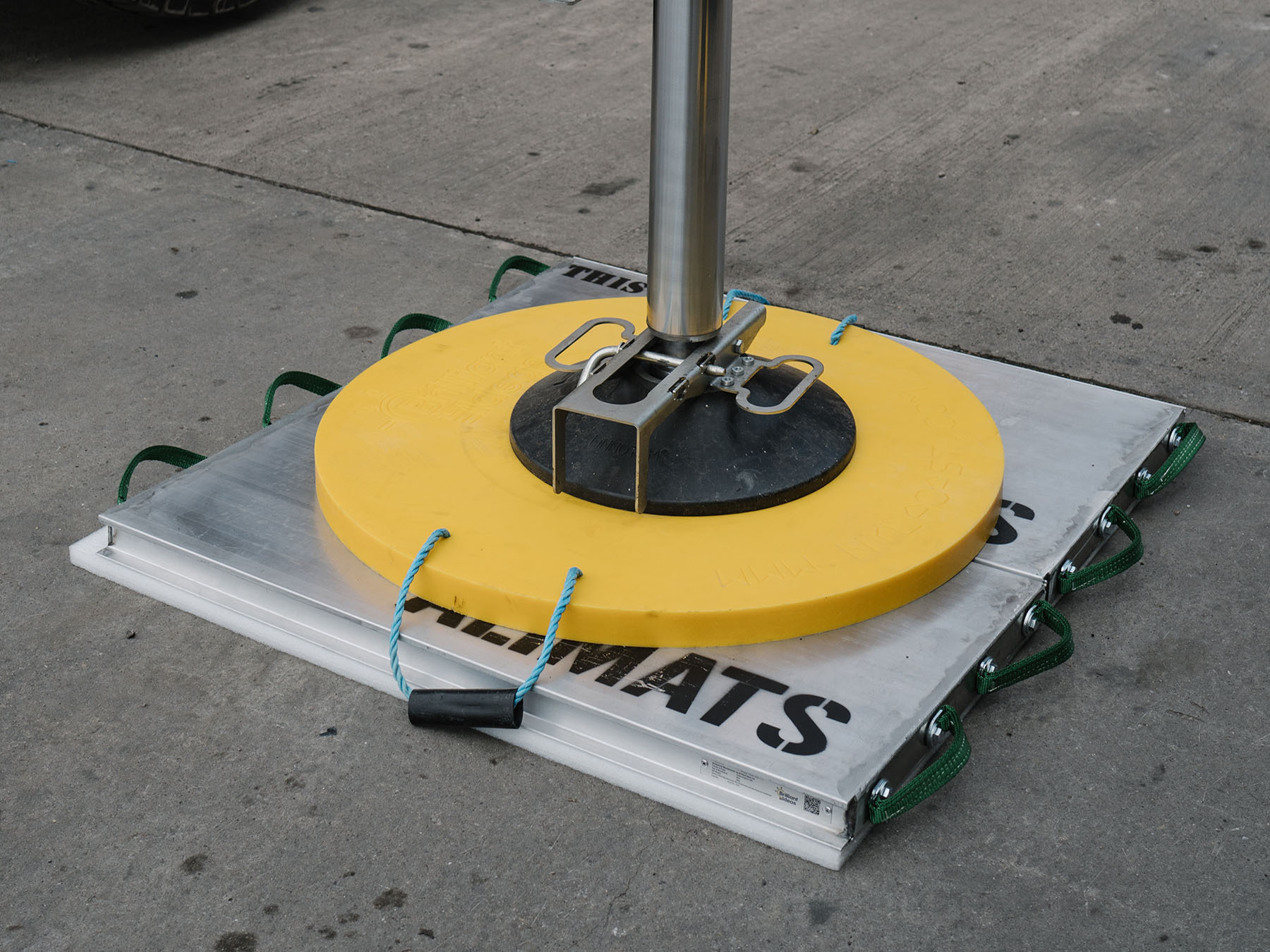
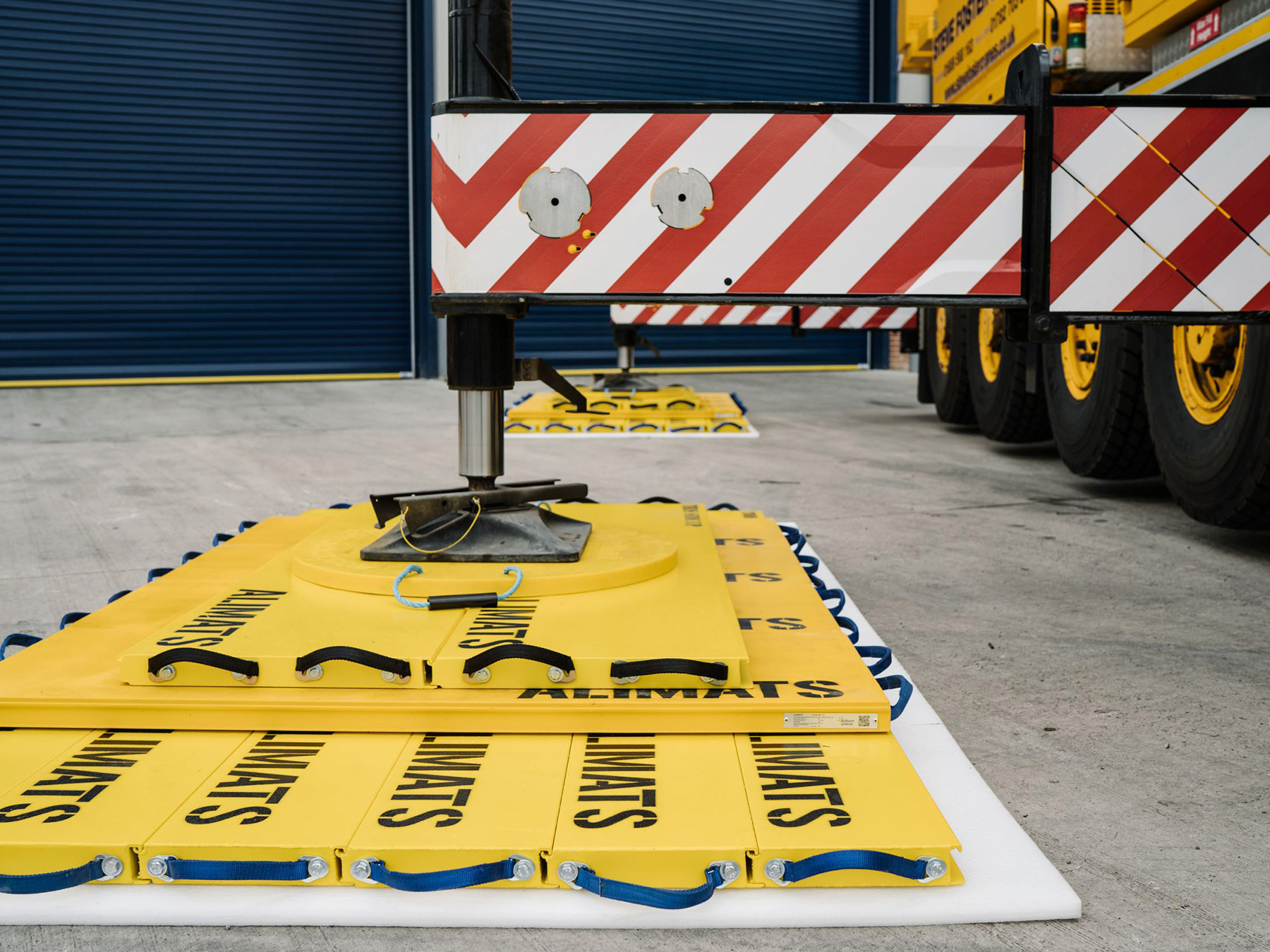
ALIMATS® is a patented, modular aluminium crane mat system manufactured from recycled, certified aluminium. Its interlocking design creates a fully engineered load spreading platform that delivers proven strength, predictable performance, and fast site setup, bringing stability and control to heavy lifting operations.
Who uses crane mats?
Crane mats and outrigger mats are used by:
- Crane hire companies
- Lifting/temporary works engineers
- Main contractors
- Steelwork specialists
- Civil contractors
- Scaffold contractors
- Modular construction providers
- Plant hire specialists
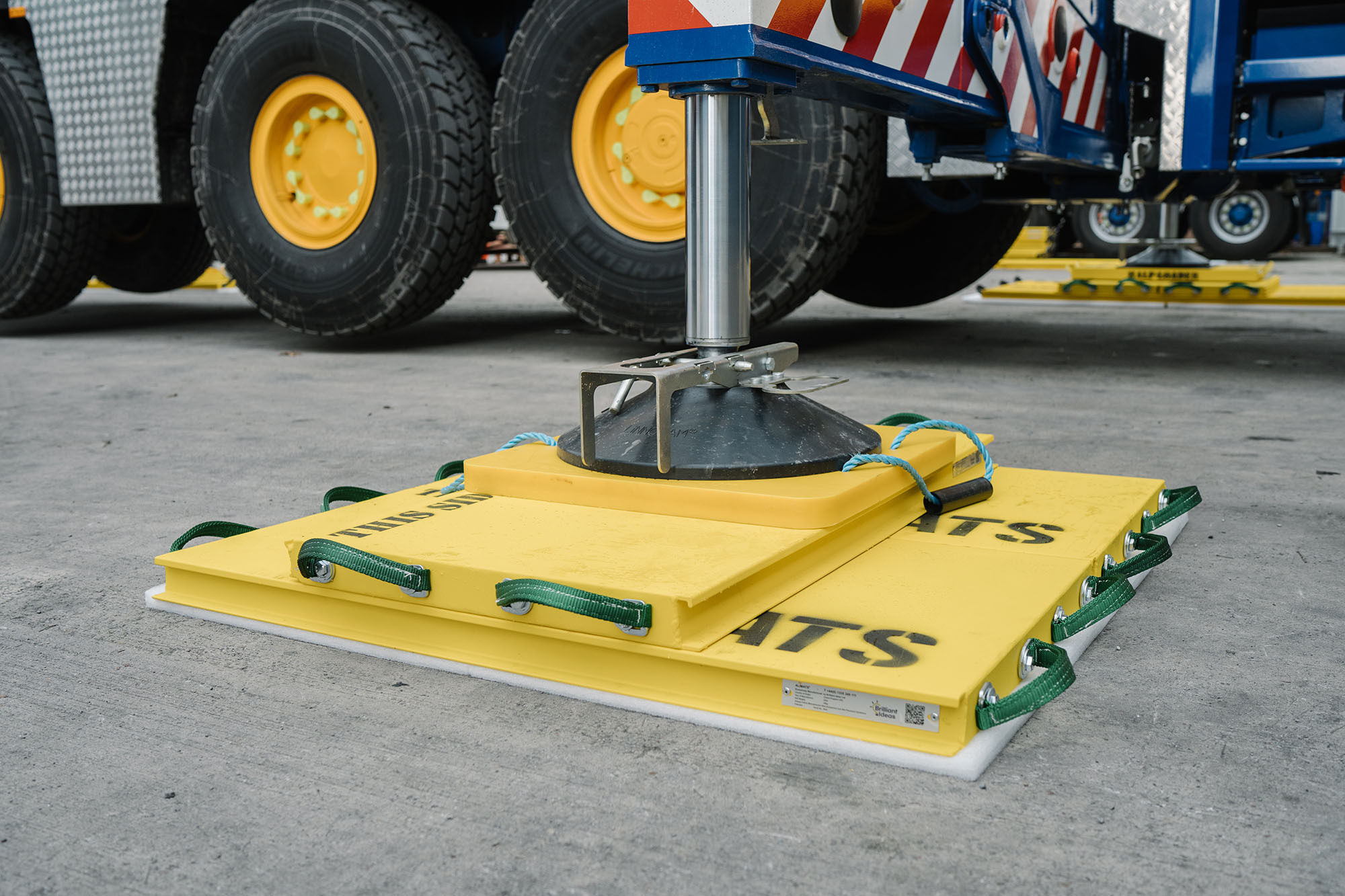
Used beneath cranes, tracked plant and concrete pumps, ALIMATS® provide stable support wherever controlled load spread is critical. Systems are available to hire online or purchase directly through the team.
ALIMATS® have been used on some of the UK’s most demanding projects, including Manchester’s Co-op Live Arena, HS2, Hinkley Point C, Heathrow and Gatwick Airport, Google HQ King’s Cross, Euston Station, Grangemouth Refinery, London Bridge, major Scottish wind farm developments, and a flagship residential build featured on a much-loved national homebuilding television series.
What are the different types of crane mats?
There are two main categories of crane mats:
Handleable crane mats
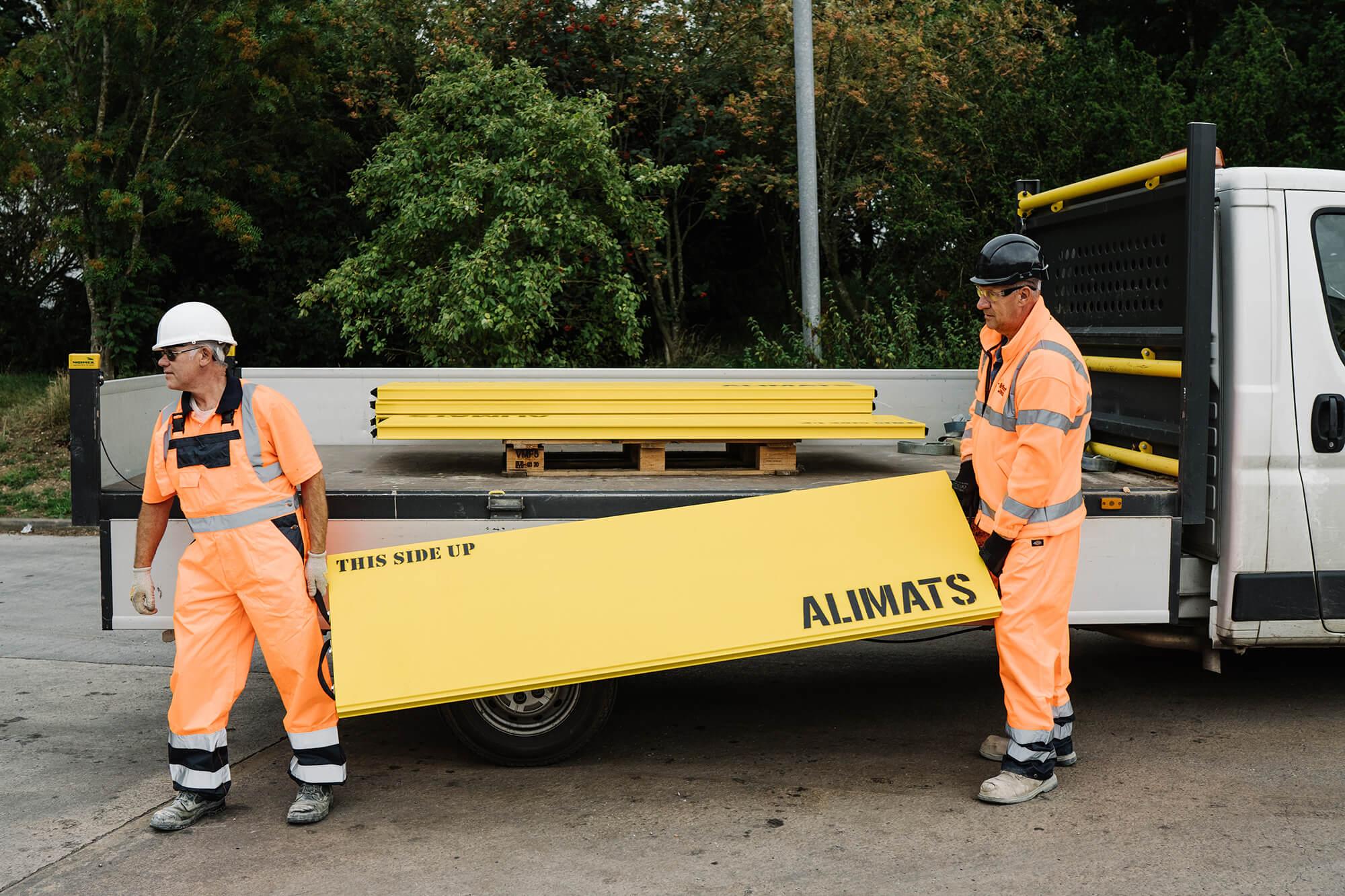
These include aluminium, timber, and plastic (HDPE or UHMW) mats. Handleable systems allow faster installation without lifting equipment.
The full ALIMATS® modular range can be assembled by hand using just two operatives, allowing fast, controlled setup without lifting equipment. Engineered stiffness ensures effective load distribution, unlike HDPE, which lacks structural rigidity, or timber, which offers no certified performance at the point of use.
Non-handleable crane mats
Traditional steel, large composite mats and Timber (European or tropical hardwoods) rely on crane placement, adding logistical complexity, extra lifting risk, and programme delay. It defeats the purpose. Mats should be in place before lifting begins.
Why choose aluminium crane mats?
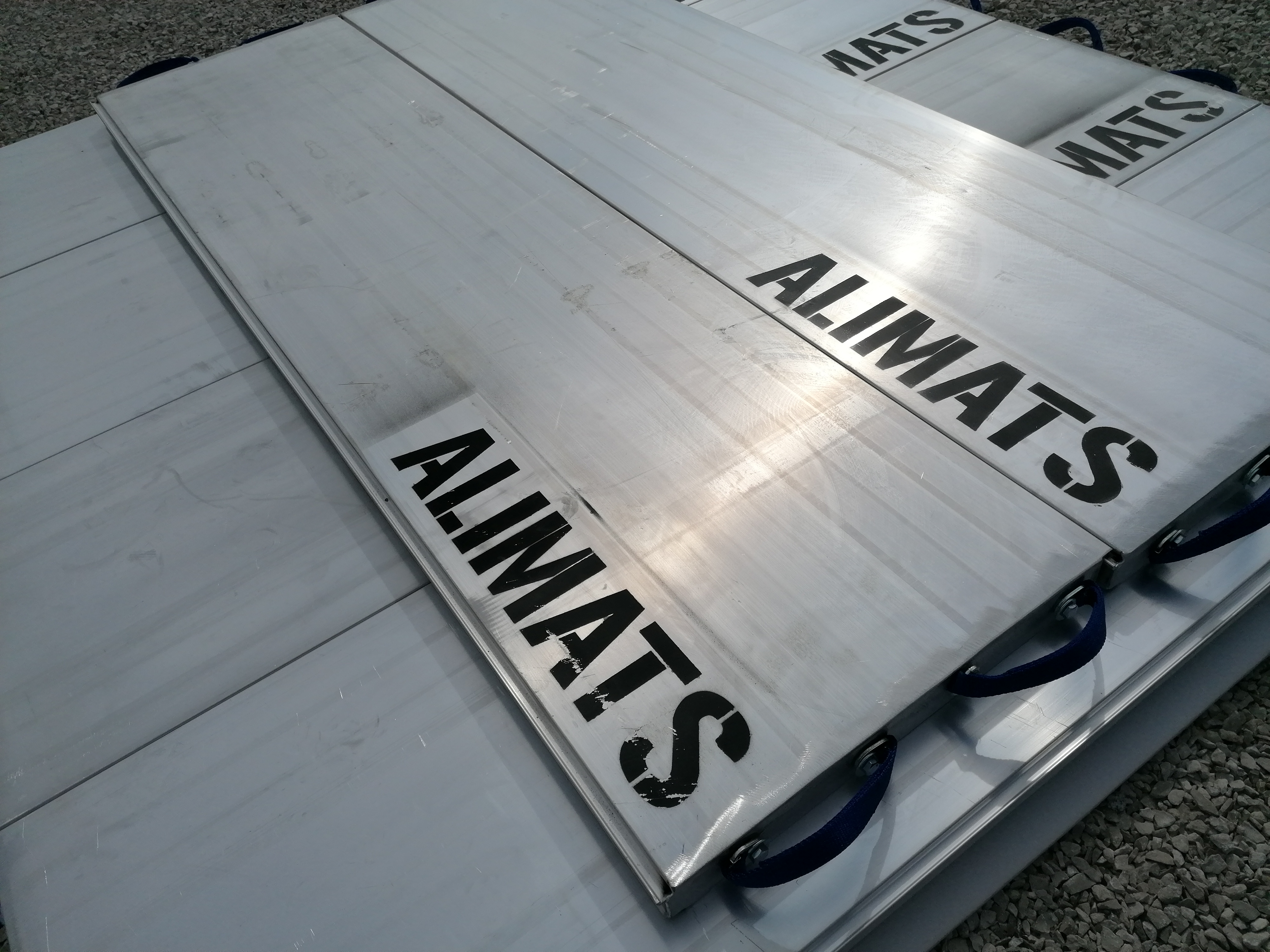
Aluminium crane mats combine high structural performance with low handling weight, delivering capabilities that timber and plastic systems cannot match.
Key advantages of ALIMATS®
- Certified performance – Independently tested and verified
- Lightweight handling – Manual placement without mechanical lifting
- Proven load resistance – High compressive and bending strength
- Dimensional stability – Maintains form under working loads
- Sustainability – Manufactured from certified recycled aluminium
- Durability – Resistant to moisture, impact, and site debris
This combination makes aluminium crane mats well suited to modern temporary works design.
What questions should you ask a crane mat supplier?
Crane mats underpin safe lifting. Getting them right depends on understanding load performance, engineering proof, and real-world site demands.
1. What is the stiffness of the mat profile?
Mat stiffness determines how effectively loads are spread across the ground. Its performance is engineered, not assumed and calculated from its design and material properties. For solid plastic mats, this is relatively straightforward. For structural aluminium extrusions, the calculation is more complex and requires verified section properties and certified material data. Accurate stiffness data is essential for reliable temporary works design and controlled load distribution.
2. What is the Safe Working Load (SWL), and how was it established?
Always ask whether the SWL is based on real world testing, Finite Element Analysis (FEA), or first principle engineering calculations. Each method has value, but outcomes depend heavily on assumptions and test conditions. Some physical tests can give misleading results. For example, applying high loads through a rigid test rig onto Ethafoam can simply force load through compression rather than demonstrating real world load spread. FEA is also valuable but must be supported by engineering judgement and practical understanding of mat behaviour.
3. How has the system been structurally analysed?
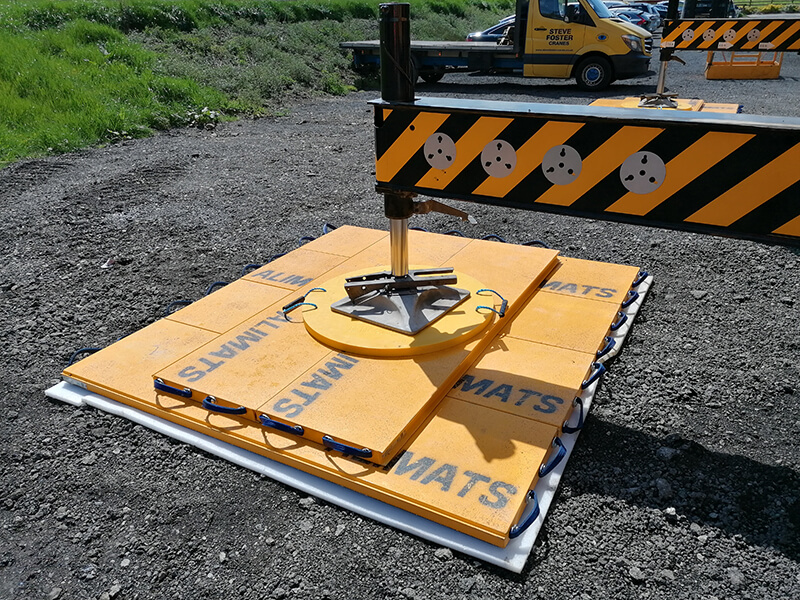
Independent first principle structural analysis provides vital insight into how load is transferred through a mat system. Our analysis showed that the highest stresses occur in the top layer, while lower layers distribute loads differently. This insight led us to design refinements, including replacing long top mats with shorter elements in larger configurations to increase stiffness and safe load capacity. It also resulted in the development of the HALF-LOADER module, a highly stiff top-profile component that improves load distribution and reduces localised pressure.
What size crane mat do I need?
Crane mat size is usually set through temporary works design, based on ground conditions, allowable bearing pressure, and crane outrigger loads. From this, the correct mat layout is defined to ensure loads are transferred safely into the ground.
Mat suitability depends on two core factors:
- Mat area – sufficient to reduce ground pressure below allowable limits
- Structural capacity – enough strength and stiffness to safely resist applied loads
To find the right ALIMATS® configuration for your project, use our online mat calculator. ALIMATS® Crane Mats - Brilliant Ideas Ltd
How do you keep crane mats in good condition?
Crane mats should be handled and installed in line with project risk assessments and placement guidelines to minimise damage and maintain performance.
For ALIMATS®, every mat returned from hire is fully inspected, cleaned, and quality checked before redeployment. This ensures consistent performance, full traceability, and reliable condition through repeated use.
Are crane mats the same as outrigger pads?
No. Crane pads are typically used for smaller outrigger loads, generally up to 1.0m², and are supplied as single round or square units. Due to the inferior material properties of standard High-Density Polyethylene (HDPE), we only recommend Nylacast Big Foot crane pads, manufactured from certified Nylanite.
Crane mats are designed to manage significantly larger outrigger loads and are generally specified in sizes exceeding 1.0m². In many cases, a Nylacast crane pad is used in conjunction with our mat configurations to optimise load transfer and protect the mat surface.
View prices or hire ALIMATS® online
To view prices, buy, or hire ALIMATS® crane mats online, visit: ALIMATS® Crane Mats - Brilliant Ideas Ltd
For project specific guidance, Temporary Works support or technical queries, contact our team on 01335 345111.